

You own it.
A single purchase, not a subscription. You hold a lifelong license to your software and the hardware it runs on, so there is nothing to renew and nothing that expires. What you buy is what you keep.
Acolytic is a research and ingestion assistant that runs entirely on your own hardware, with no cloud and no accounts. Feed it your papers, query them locally, and think faster.

Data centers and GPU capacity are scarce, and getting more expensive every quarter.
That cost reaches you: usage limits, price increases, or a product tuned to keep you engaged, not to give you the right answer.
Your access, your data policy, and your roadmap were never yours to make in the first place.
Acolytic runs on the hardware already in front of you and answers to no one else's infrastructure. Not a smaller version of the cloud. A different category, built on different assumptions.
Acolytic is a purchase, not a plan. There is no monthly bill, no seat license, and no vendor who can revoke access. You buy the hardware and software once, and it's yours for as long as you want it.
A single purchase, not a subscription. You hold a lifelong license to your software and the hardware it runs on, so there is nothing to renew and nothing that expires. What you buy is what you keep.
Acolytic runs entirely on hardware you control. Whether your internet drops or you switch it off on purpose, Acolytic keeps working.
No company can sunset your plan, change your terms, or lock you out. There's no account to deactivate, only a machine you own.
Not a SaaS trial. Not a rented API key. Acolytic is something you actually own, the same way you own a laptop or a truck.
Four steps, no network required. From first boot to first answer, your documents never leave the machine in front of you.
Set up Acolytic on your own machine. There's no cloud account and no network requirement. It's isolated by design from the first boot.
Feed it your papers, reports, and source material. Acolytic indexes your research library locally, entirely on-device.
Ask questions against your own corpus. Every answer is grounded in documents that never left your hardware.
Surface connections across your research in seconds, entirely offline and ready whenever you need to think.
Disconnected, denied, degraded, intermittent, or limited conditions, DDIL for short, are the normal operating environment at the edge, not the exception. Acolytic was built to run exactly there, and it works the same way in a lab, a newsroom, or a small business.
Runs on the hardware you already carry or already own, not a data center you don't control and can't inspect.
No network requirement and no phone-home. Secure by architecture, not by policy, because there is no connection to compromise in the first place.
Your documents, your queries, and your models stay on your device and under your control. Nothing is transmitted, logged, or held by us.
The same design that holds up in a disconnected field environment holds up on a researcher's desk. One system, built once, useful everywhere.
Ingest years of papers and notes into a private corpus you can query instantly, without sending a single file to a third-party server.
Move through diligence, market research, and competitive analysis at the speed of your own thinking, not a rate-limited API.
Where data cannot leave the building, or the network cannot be trusted at all, DDIL conditions are the daily standard, not the exception. Acolytic offers a genuine air gap: full research-assistant capability with zero network dependency, built to work with the operator, not around them.
If you'd rather own your tools than rent your intelligence, Acolytic was built for you.
Designed to support customer compliance with the HIPAA Security Rule. Clinical documentation and coding assistance that never sends a patient record off your device.
“A system for people who work in these controlled spaces, those who cannot accept generic outputs and will not let sensitive data leave their environment.”
Holly Batt, Co-Founder
Acolytic is built by a small, founder-led team at Scry Systems Inc., a Delaware C-corp founded in 2026. We didn't set out to build another subscription. We set out to stop paying rent on our own thinking.
Our background spans hands-on hardware integration, offline systems, and technical research tooling: the kind of work where sending data to someone else's cloud simply isn't an option. That constraint shaped how Acolytic is built, down to no server dependency, no phone-home telemetry, and no assumption that a network is even there.
We built Acolytic to put real, research-grade AI capability entirely in the owner's hands: not licensed, not metered, and not contingent on a vendor's roadmap. If Scry Systems disappeared tomorrow, your Acolytic would keep working.
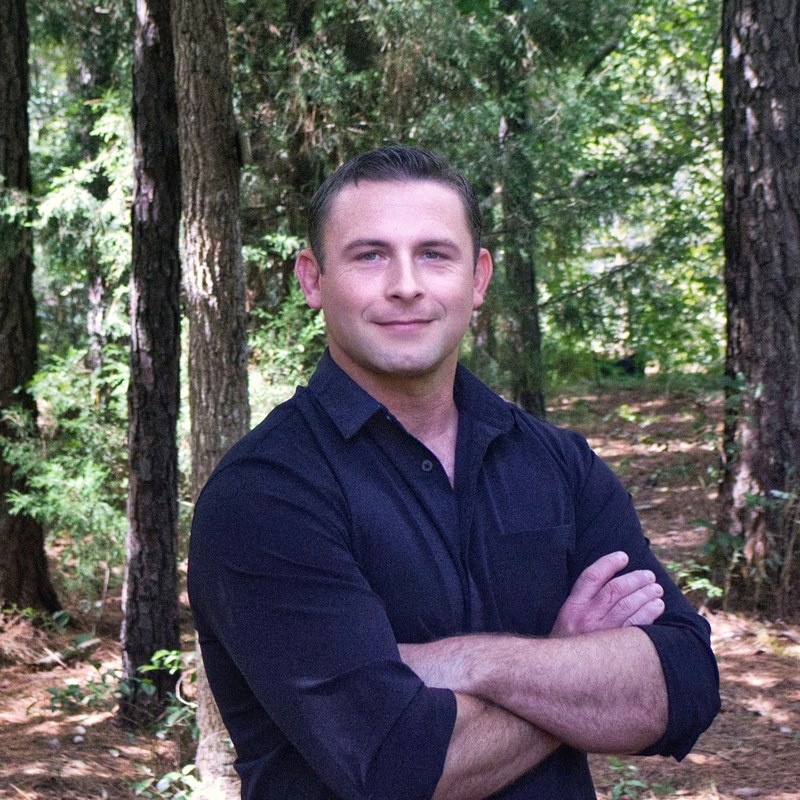
CEO & Co-Founder
“Different buildings, different rules, same core problem.”
For most of my career, access to the more capable tools was gated by cost, by clearance, and by the simple requirement to master the basics before anyone let you near anything more advanced.
In the Marine Corps Infantry, and later as a Special Operations officer, I had access to technologies that were often ahead of their time. Being part of a community built around early adoption instilled a habit of thinking about what could be done, instead of just accepting how things already were.
In the military you build redundancy into every plan, and you plan for what happens when things do not go the way you expect. Reference material at the edge means pen and paper, printed manuals, or laminated cards under strict handling rules. You operate in denied, degraded, intermittent, and limited conditions, and under emissions control, where transmitting is not a bandwidth question but a signature that can put the whole operation at risk. Nobody plans for a cloud service to be part of that. When you need to pull in and make sense of a large volume of information, every option comes with tradeoffs and a short list of authorized tools.
When I left that world, I expected the constraint to disappear. Instead, I found the same challenges from a different direction. I went to Johns Hopkins for biotechnology, moved into health technology, and found myself holding information I could not paste into a text box on somebody else's server. The instinct was identical to the one you build around classified material. We think in terms of data control, access points, and who actually has visibility into what you are working on.
Different buildings, different rules, same core problem.
Ask a clinician about patient records, a lawyer about case files, a researcher about unpublished work, or anyone at a company with an IP policy someone actually thought through. The most useful software of the last decade comes with a tradeoff most serious people cannot accept: hand over your data, or fall behind the people who will.
Acolytic is an AI research assistant that runs entirely on hardware you own. It ships to you, works with no wifi and no cloud dependency, and never requires you to hand over your data to use it. What it learns about your work stays on the device, permanently. No account, no subscription, nothing calling home.
We often accept the risk of a subscription AI platform because it runs on undeniably powerful models, models built for the collective use case of hundreds of millions of users across business and personal life. But when your team is developing a novel therapeutic, or you are managing sensitive technical information tied to a strategic initiative, the benefit of a superheavy model no longer outweighs the risk of your data sitting in the compute of an offshore data center.
We are delivering AI to the edge, both literally and metaphorically.
We don’t throttle your compute, we don’t downgrade you to a lower tier, and we don’t track your token usage. The platform is yours. It works for you, when and how you need it.
We are patent pending. If you think offline AI, think Acolytic.
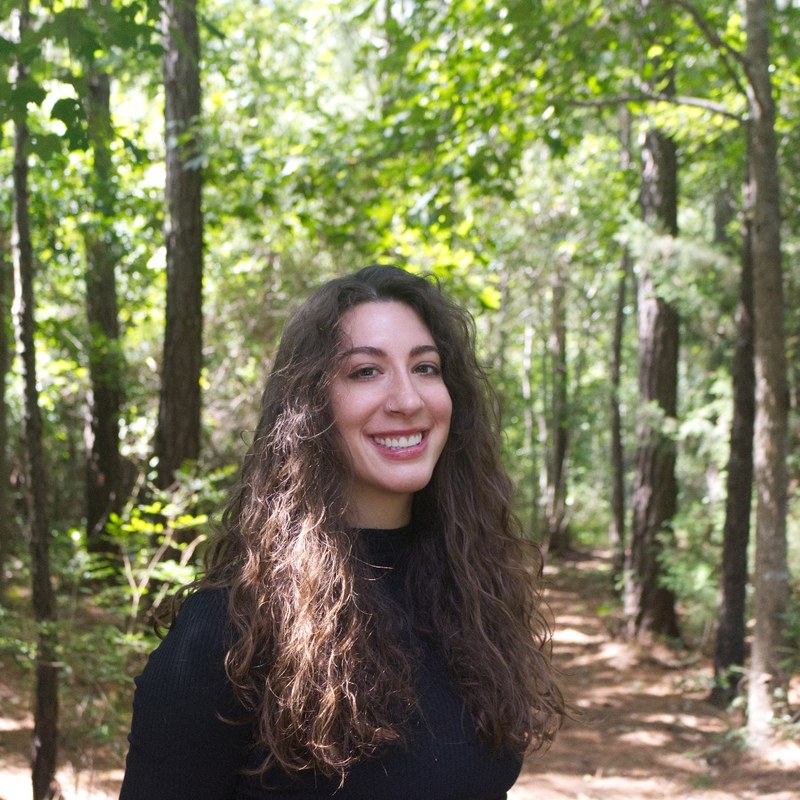
Co-Founder & President
“The status quo is a starting point.”
Early in my life I realized my passion for helping people. I pursued undergraduate degrees in political science and nutrition, but I found my calling in public health and in aligning opportunities with underserved communities. I often felt I could offer more, but I lacked the tools and knowledge to act on it. That changed at the Johns Hopkins Bloomberg School of Public Health, the top research university and the number one public health program in the world. Pairing scientific expertise with my work on extensive fundraising initiatives changed how I saw the landscape and the impact that could be made.
I am a public health nutrition scientist by training, and that field presents complex challenges. It often requires communicating quantitative science through qualitative terms. I was trained to ask questions that turned on the origin and veracity of the information. Where did a claim originate? How was a data point measured, and by what metric? What inferences can be drawn, and in which populations do they hold?
At Johns Hopkins I worked alongside world renowned researchers who refused to accept the status quo and who showed me what science can do for the world.
My passion has always been helping people access resources that are beyond their reach. It is the core of my professional inspiration, and it has driven me to keep looking for new ways to bring those resources to the people who need them most. The emergence of powerful AI tools changed the landscape for professionals in nearly every field. What I found in mine is that the science is incompatible with existing AI platforms, or it creates liability, or both. Some in the field adapted to what generic AI could offer and kept moving. I read the same evidence and thought of my mentors who showed me the art of the possible.
When I met my co-founder, Dylan Sharrock, a former Marine Special Operations officer with an MBA and an MS in Biotechnology, we recognized a shared work ethic and a shared standard of judgment. We soon realized we had walked into the same problem from opposite sides. In his world, sensitive data could never be entered into an existing platform. In mine, the outputs that came back were scientifically unreliable.
I have spent my career in highly regulated science, where the question is never whether the evidence is interesting. It is whether the data substantiates the claim being made. Together we built Acolytic, a system for people who work in these controlled spaces, those who cannot accept generic outputs and will not let sensitive data leave their environment.
Acolytic is coming to researchers, founders, and technical teams who want intelligence they own, not intelligence they rent. Join the waitlist to be first in line.